

The Story Behind America’s 250th Anniversary Painting
Before we get into the story, I need a moment to process just how unbelievable this project is.
My dad, Scott Jacobs, was selected to create the official painting commemorating the 250th anniversary of the United States of America.
Even writing that sentence feels surreal.
When he first told us he was being considered for the project, I couldn't quite wrap my head around it. Out of the countless talented artists across the country, leaders in Washington, D.C. were looking for someone to create a piece that would help tell the story of America's birth. It felt too big to be real.
Then he got the call.
I think our entire family had to sit with the news for a while before it truly sank in.
This wasn't a painting for a private collector, a corporation, or even a major brand. This was a painting tied to one of the most significant milestones in American history; the 250th anniversary of the signing of the Declaration of Independence!
Think about that for a second.
A quarter of a millennium after our nation's founding, the people organizing the celebration wanted Scott Jacobs to help tell that story through art.
How incredible is that?
Okay, now that I've had my fan-girl moment, let's get into how it all happened.
How It Started
The project began through conversations between Scott and a committee in Washington DC. Over the course of many conference calls, members of Freedom 250 worked to get to know him, understand his artistic process, and determine whether he was the right fit for such a historic creation.
As the selection process continued, the field of artists was narrowed down and that's when Scott received his first email from Freedom 250 and Justin Caporale from the White House.
"I was nervous receiving the email because I didn't think I'd get it. I just figured something THIS cool wasn't going to happen in my lifetime. But obviously it did, and it's pretty bitchin'.
When I found out I was selected for the project, I got teary-eyed and covered in goosebumps. I had an idea in my head, and now I had to execute something my nation and I would both be proud of."
The Deliberation Process
During the initial discussions, Scott, Jimi, and members of Freedom 250 spent hours on conference calls exploring possible concepts.
There were several directions they could have taken.
"I'm glad they chose this idea because it was the most historic," Scott said. "The other concepts included some of the things people commonly associate with America like eagles, purple mountains, and red, white, and blue."
Instead, the group chose to focus on a moment that changed the course of world history: the signing of the Declaration of Independence.
That decision would ultimately shape everything that followed.
Gathering the Props
Before a single brushstroke could be painted, Scott immersed himself in research.
He studied the signing of the Declaration, who was present, where it took place, and every detail he could find about those pivotal days in the summer of 1776.
The research revealed that John Hancock and Charles Thomson were the first to sign the document on July 4, 1776, while the remaining delegates signed on August 2.
The Founding Fathers gathered inside a dimly lit building, illuminated primarily by candlelight. They knew the risks. By signing the document, they were committing an act the British Crown viewed as treason and a decision that could have cost them their lives.
Benjamin Franklin was present to witness the first signing.
Every detail mattered.
The flintlock pistol featured in the painting came from a private collection owned by a local friend who graciously allowed the Gallery to borrow it for the project.
Photographing History
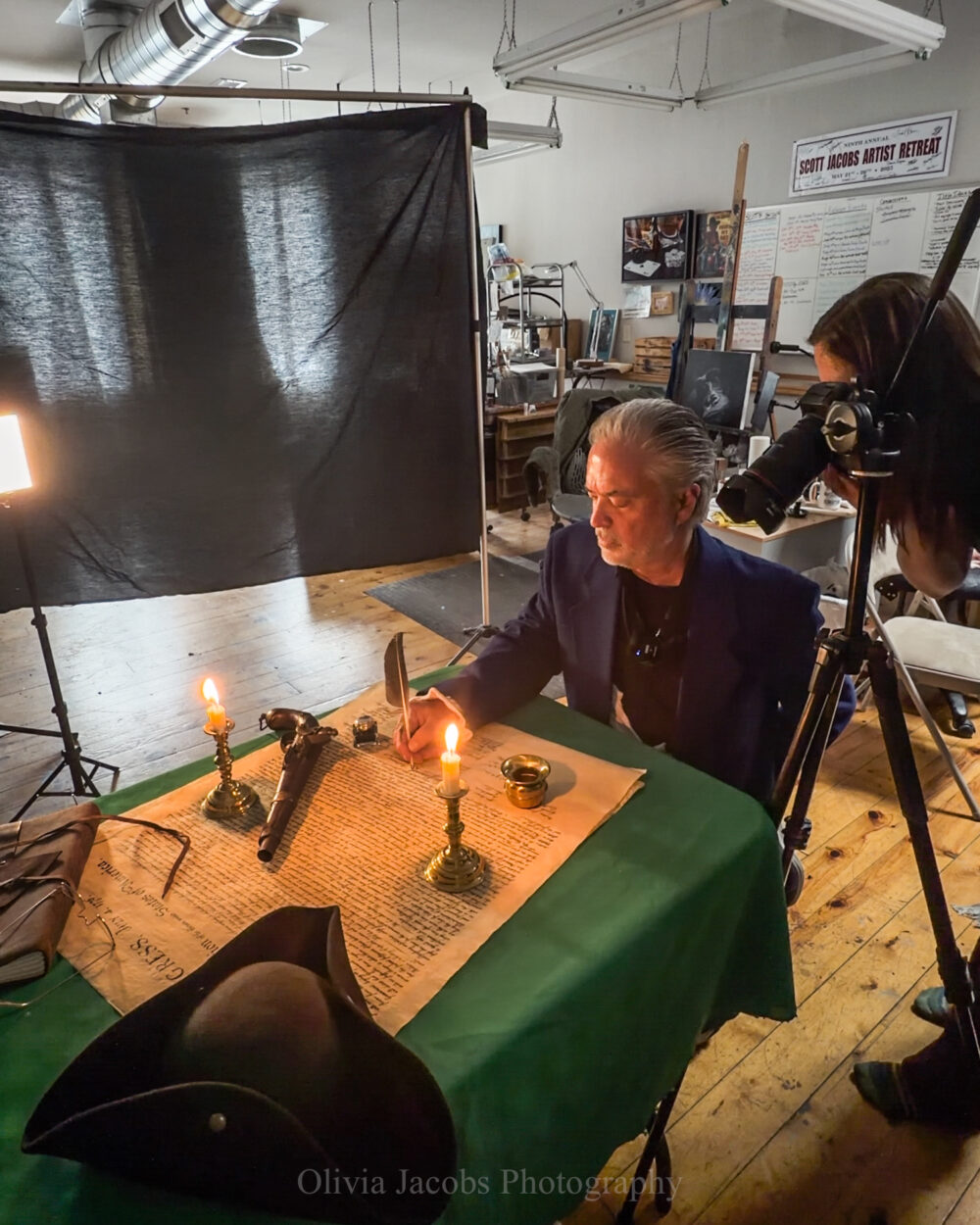
I arrived the morning of the shoot with my camera gear and lighting equipment. Scott and Jimi had already begun arranging props on a table covered in green fabric in an effort to bring this moment in history back to life.
What followed was a three-hour photoshoot filled with experimentation, discussion, and problem-solving as we tried to imagine what that room might have felt like 250 years ago.
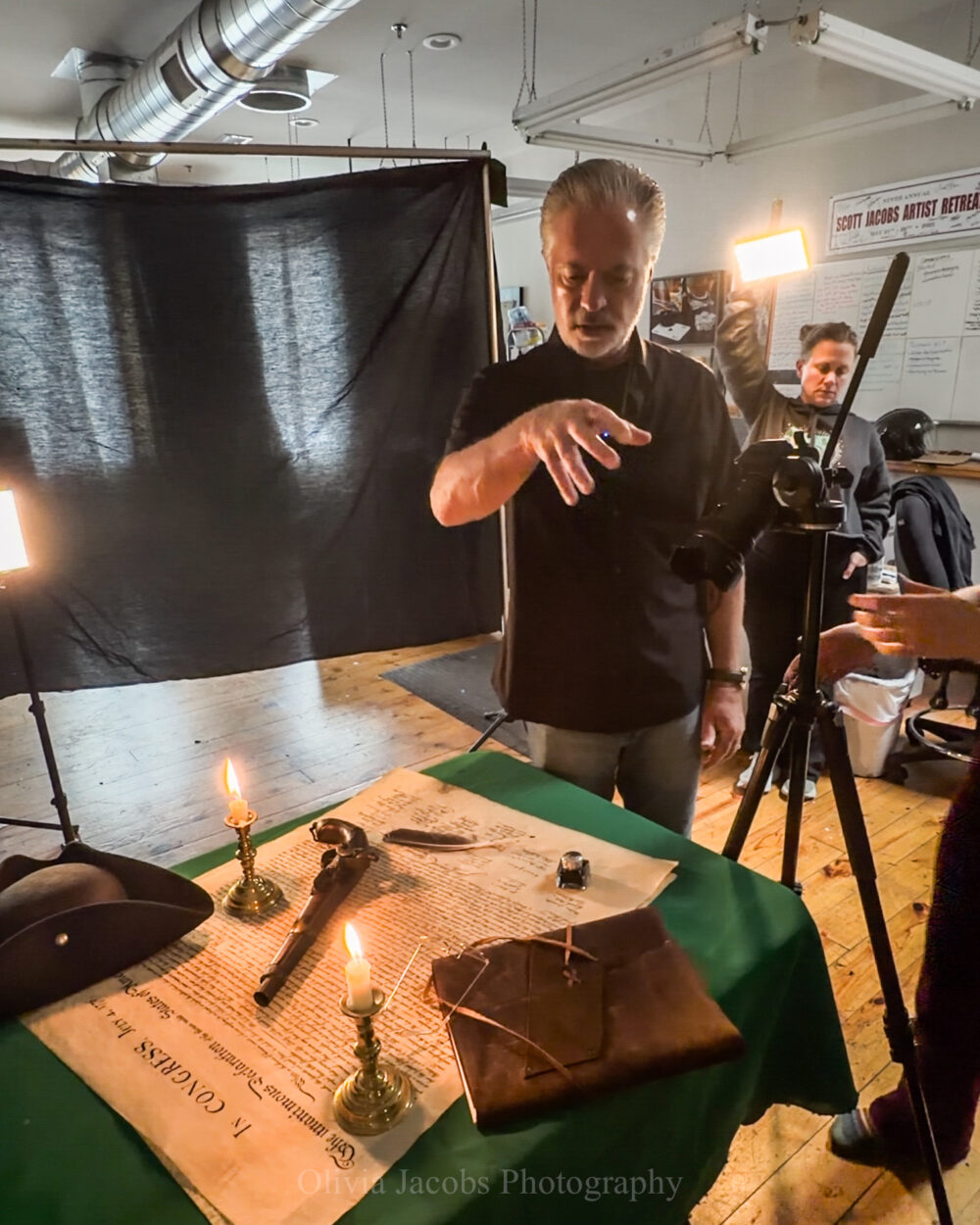
Eventually, Scott stepped into the scene himself, wearing a blue suit jacket and, because every great historical recreation has a little movie magic involved, one of Jimi's ruffle belly-dancing sleeves showing underneath. He picked up the quill and assumed the role of John Hancock.
"If I was John Hancock committing treason," Scott joked, "I'd want a gun close by."
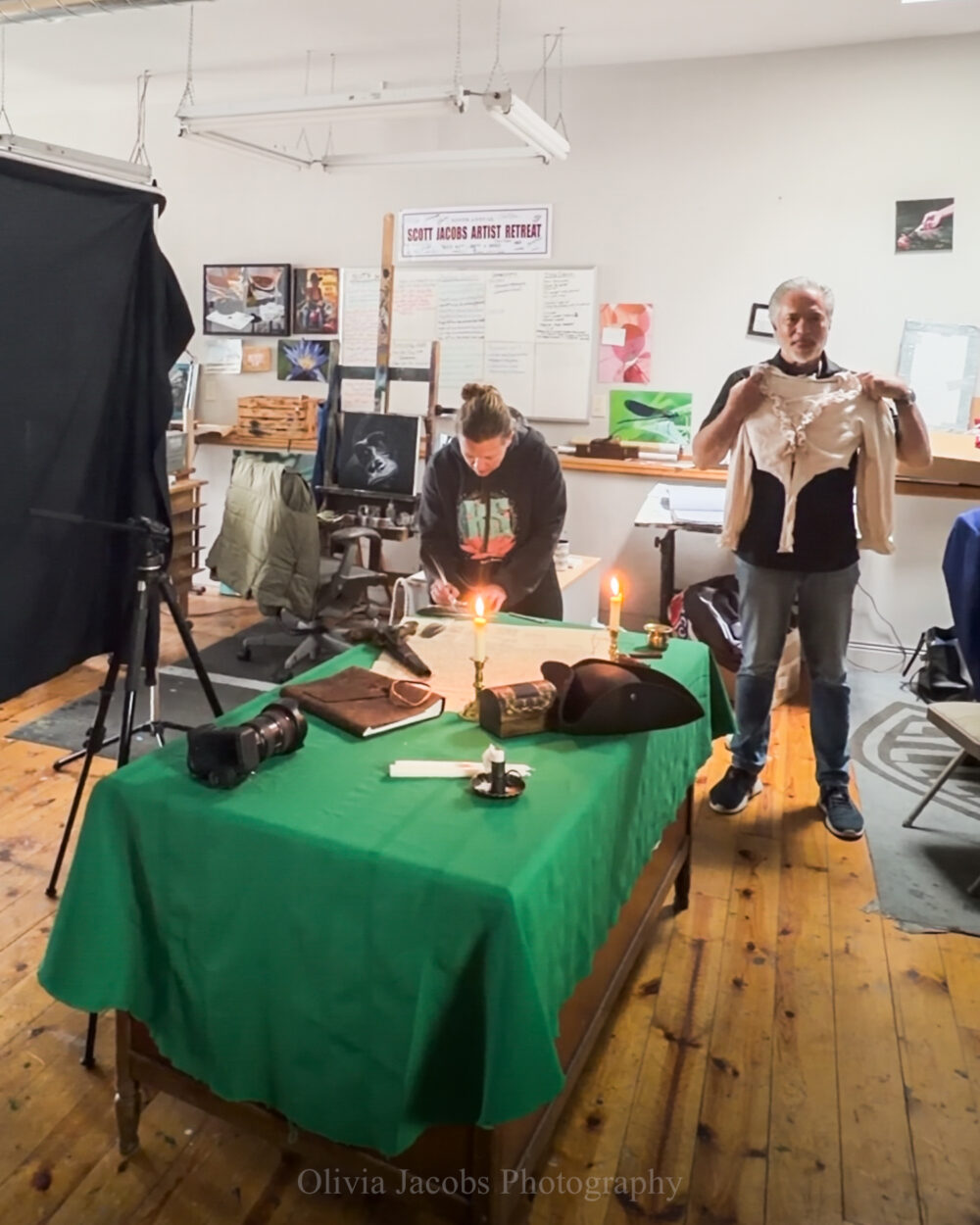
At first, the table was crowded with props.
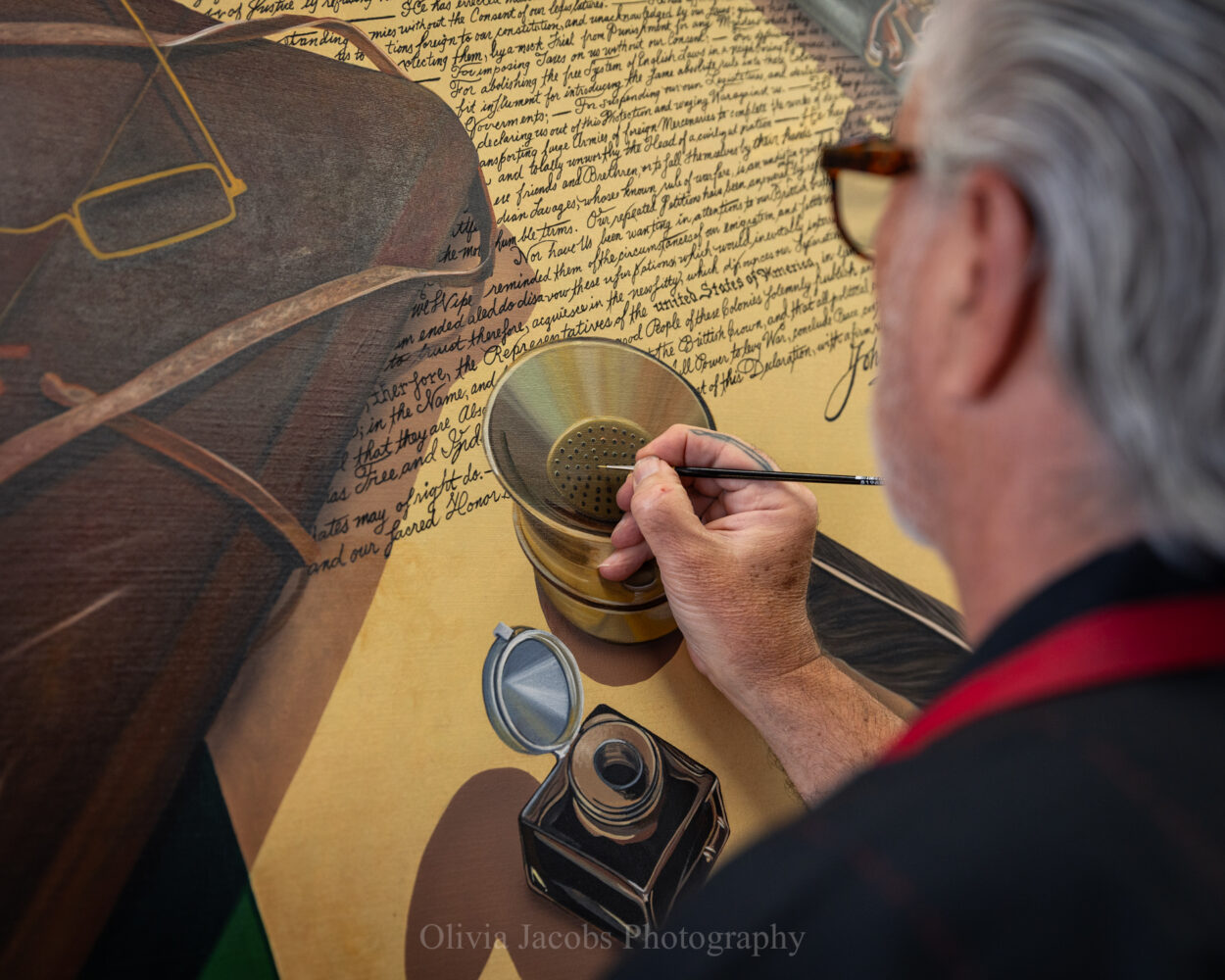
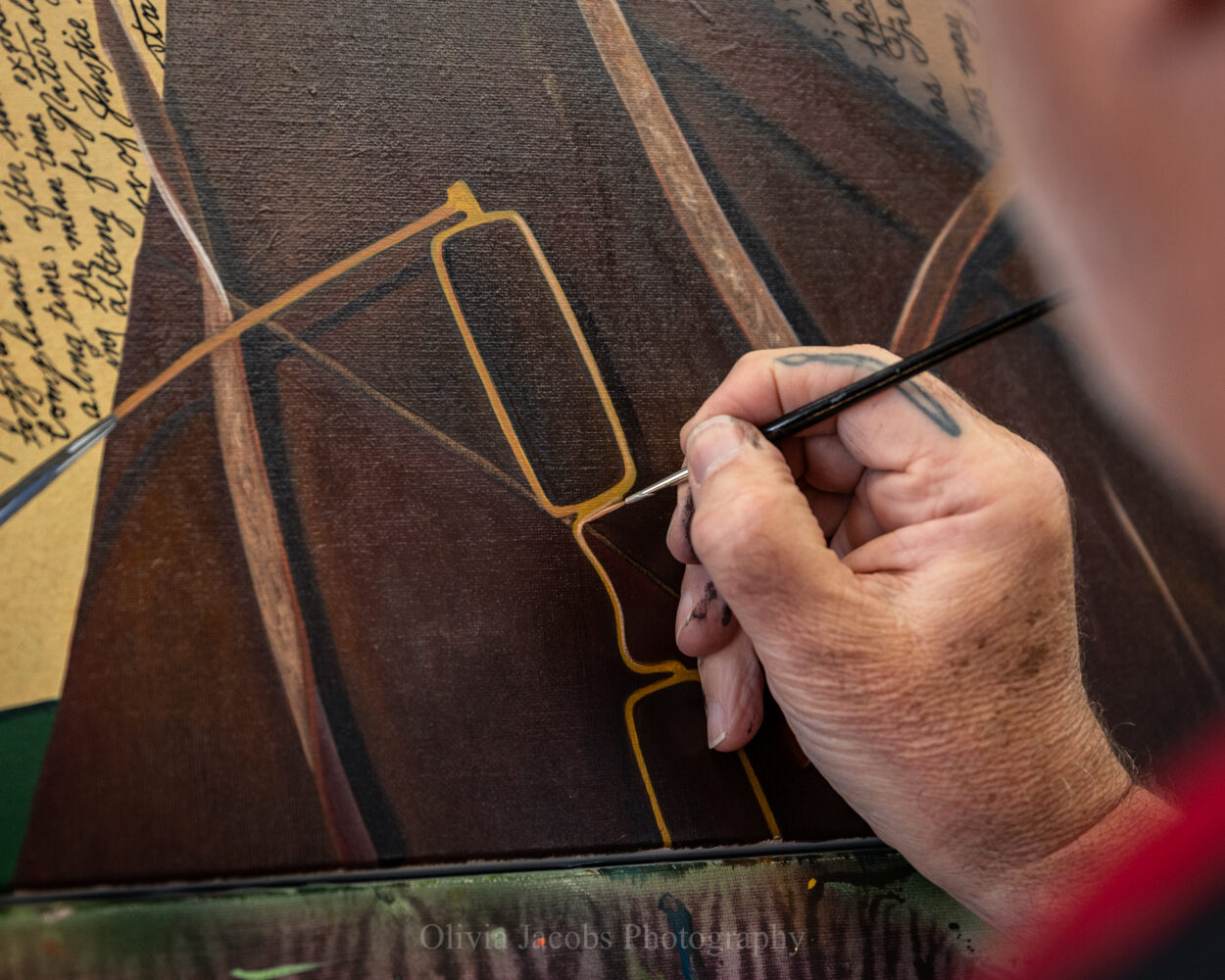
The items included on the table were all relevant to the era. There was a jar of ink, a pounce pot which would've been used to sprinkle over wet ink, a stamp and wax to seal the document, a leather-bound journal and glasses for Benjamin Franklin, a couple feathers and a small knife to sharpen the tips when they dulled.
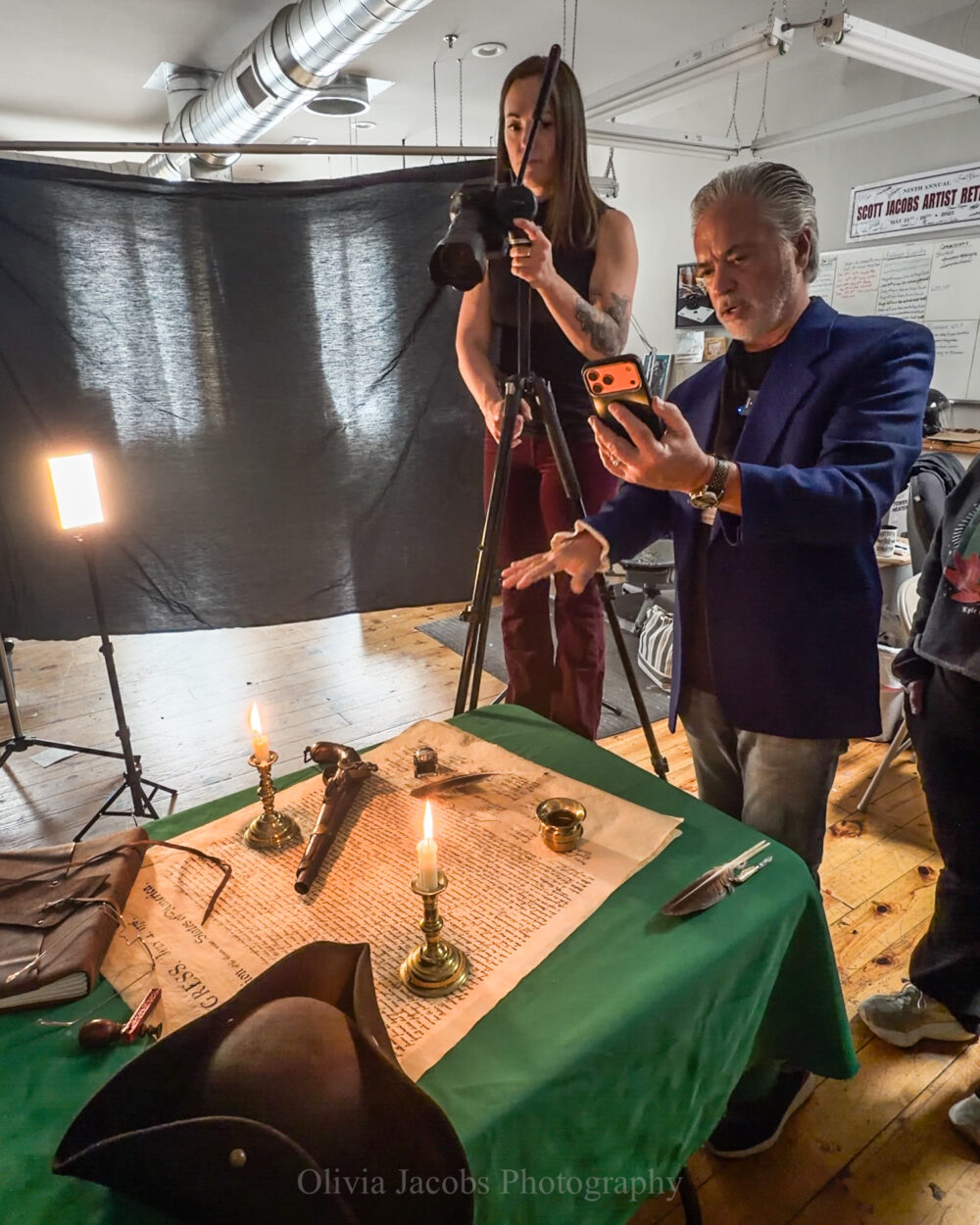
But as I photographed the scene, something felt off. The objects were all relevant and they looked interesting, but they were competing with the story.
This wasn't a painting about artifacts. It was about a moment when a group of men risked everything to create a new nation.
So, every twenty shots or so, we'd move or remove items from the table.
The simpler it became, the more powerful the photos felt.
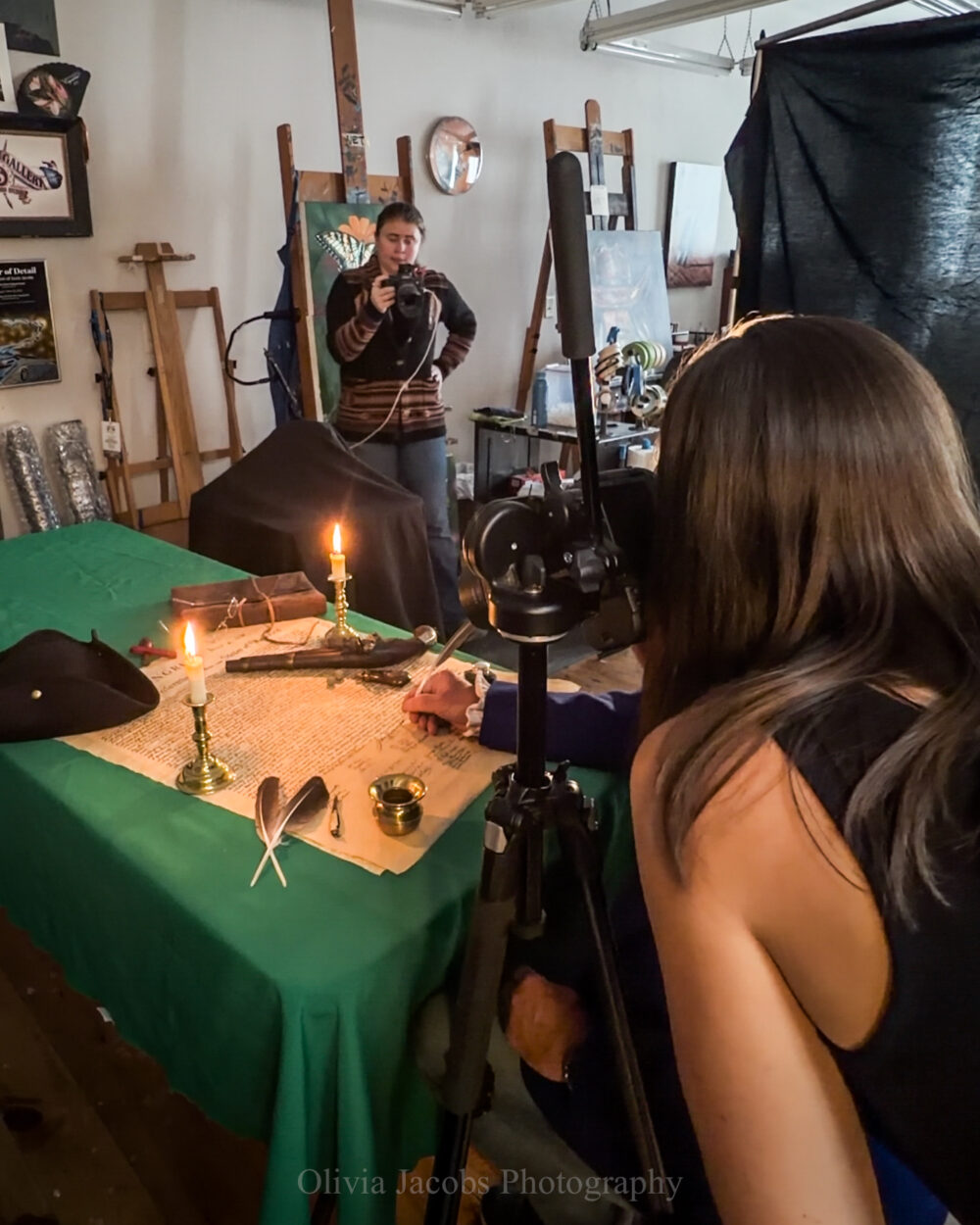
The focus returned to what mattered most: a signature on a piece of paper that would change history forever.
The Selection Process
When I got home, I immediately uploaded all 400 photos into Lightroom and began sorting through the images.
As I started reviewing them, I called my mom and joked, "I'm just going to start with the newest photos first. I shot those freehand at the end, and somehow my last shots always seem to be the best."
At the time, I didn't realize how true that statement would be.
I gathered a small collection of images featuring different arrangements of props, lighting, and camera angles and sent them to my family for feedback.
Then came the deliberation.
We studied each image, discussing what worked, what felt authentic, and what best captured the weight of the moment. Some photographs highlighted the props while others showcased the pistol, the document, or the candlelight.
But one image kept drawing us back.
It was the very last photograph I took that day.
Unlike the carefully planned compositions that came before it, this one was shot freehand. I positioned myself close to the table and photographed the scene from alongside Scott's right hand as he signed the document.
It was an angle I knew well.
Over the years, I've photographed my dad painting hundreds of times, and I often find myself drawn to that same perspective looking past his hand as he creates. It's a viewpoint that feels personal, almost like standing beside him in the creative process.
This time, however, the stakes were a little different.
What started as one final frame at the end of a photoshoot became the image everyone unanimously chose.
Out of 400 photographs.
Out of months of planning.
Out of all the concepts, props, and camera angles.
The final image selected to become the official painting commemorating America's 250th birthday was the very last photo I captured before packing up my camera.
The thought still gives me goosebumps.
An angle I've photographed countless times while watching my dad work in his studio would now serve as the foundation for a painting created to celebrate the birth of our nation.
Not bad for one last shot, eh?
This section is a great opportunity to show readers the amount of labor, craftsmanship, and historical responsibility involved. Most people see the finished painting and never realize how many hours went into details like the handwriting alone.
The Painting Process
Once the selected photograph was transferred to his tablet, Scott began the process of transforming a photograph into a painting.
The first step was blocking in the major shapes and colors.
While Scott and Jimi worked from the digital reference, they began applying the base layers of paint to the large stretched canvas. This stage can take weeks depending on the size and complexity of a painting.
Every inch of the canvas must be covered with a solid foundation of paint before the finer details can be added. It's a critical step that allows the highlights, shadows, textures, and subtle color shifts to stand out later in the process.
Ironically, it's also one of the least exciting parts to photograph.
I rarely document the blocking-in stage because, to be honest, it looks a little like a giant coloring book. The outlines are there, the colors are flat, and the magic hasn't appeared yet.
The Lettering
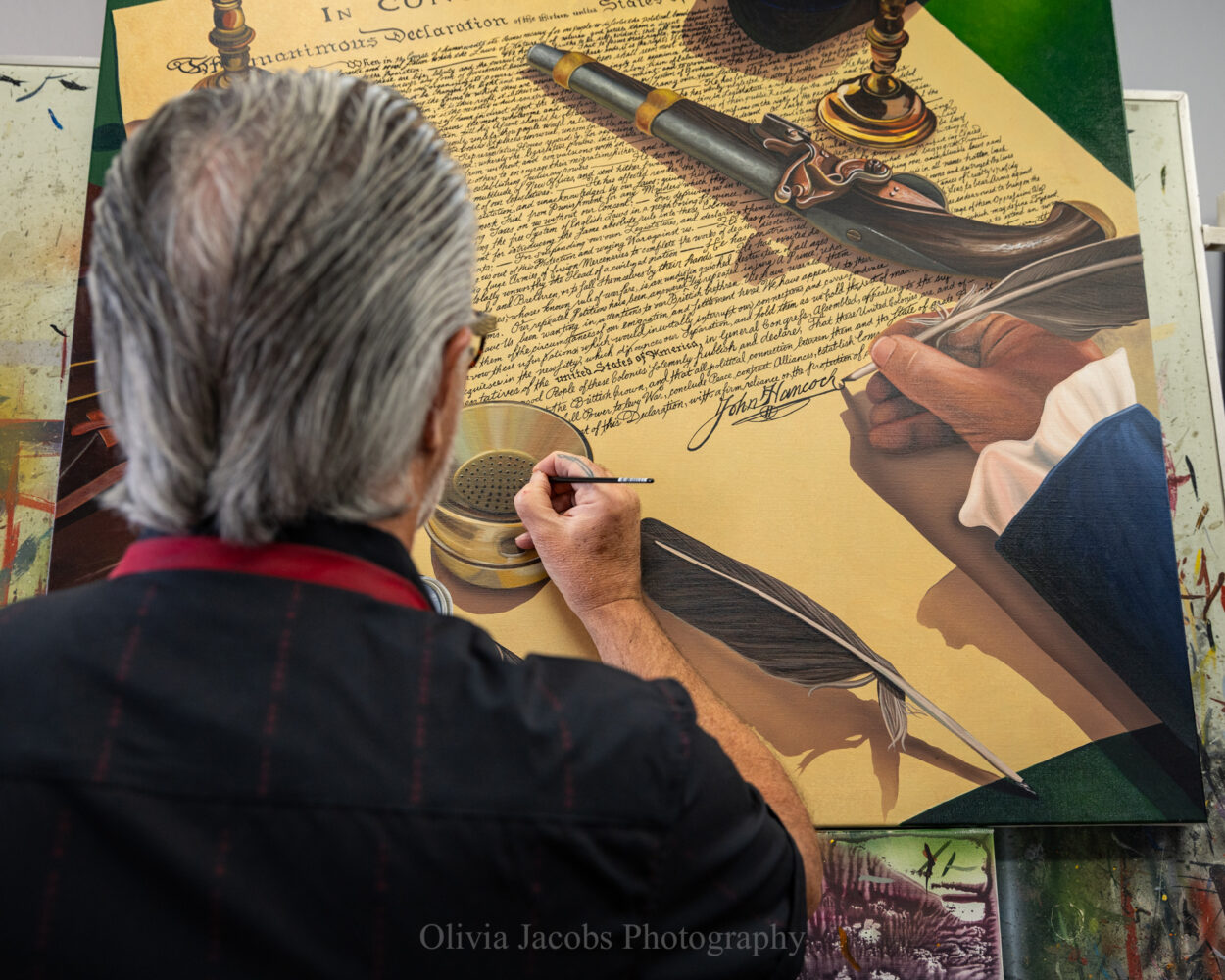
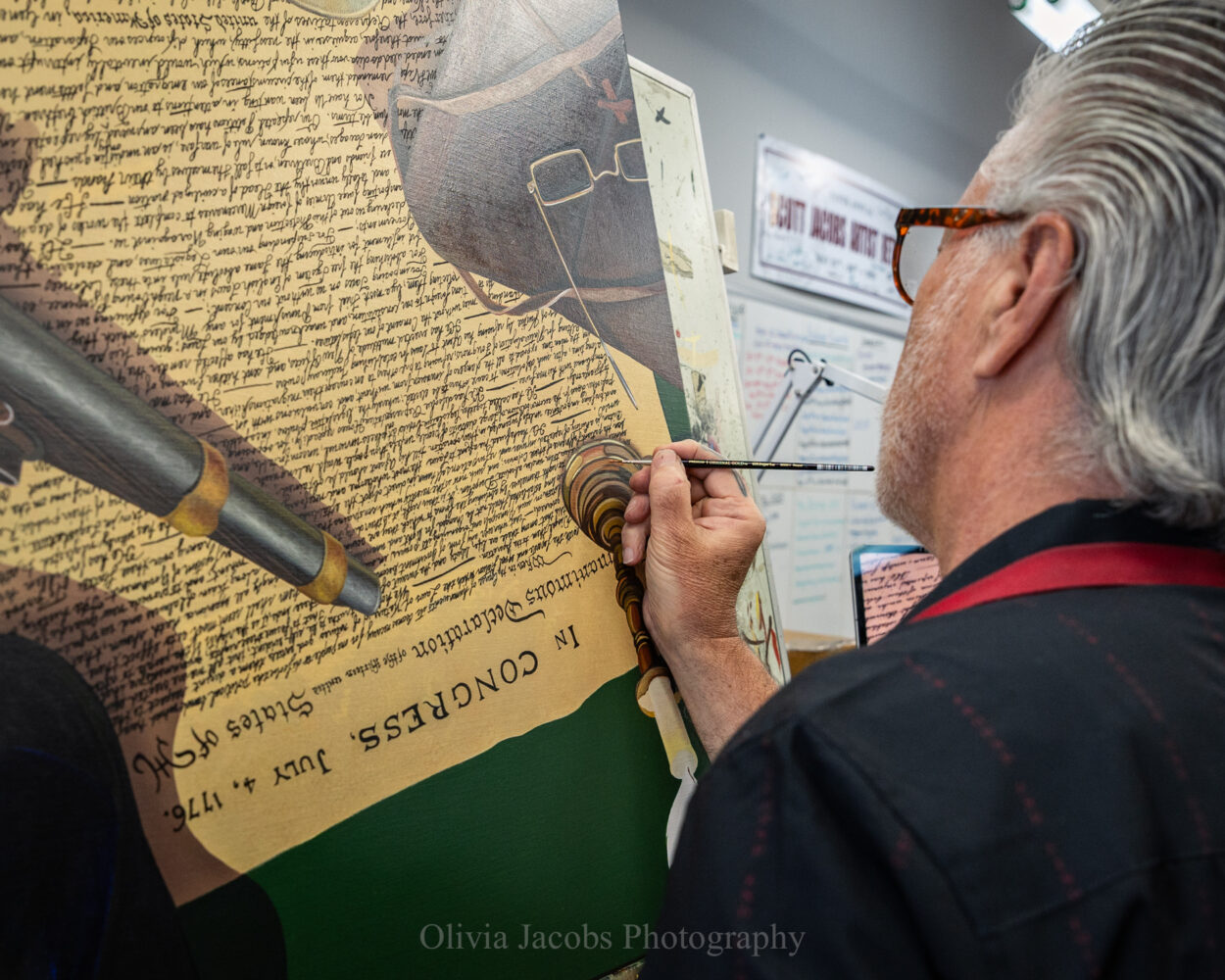
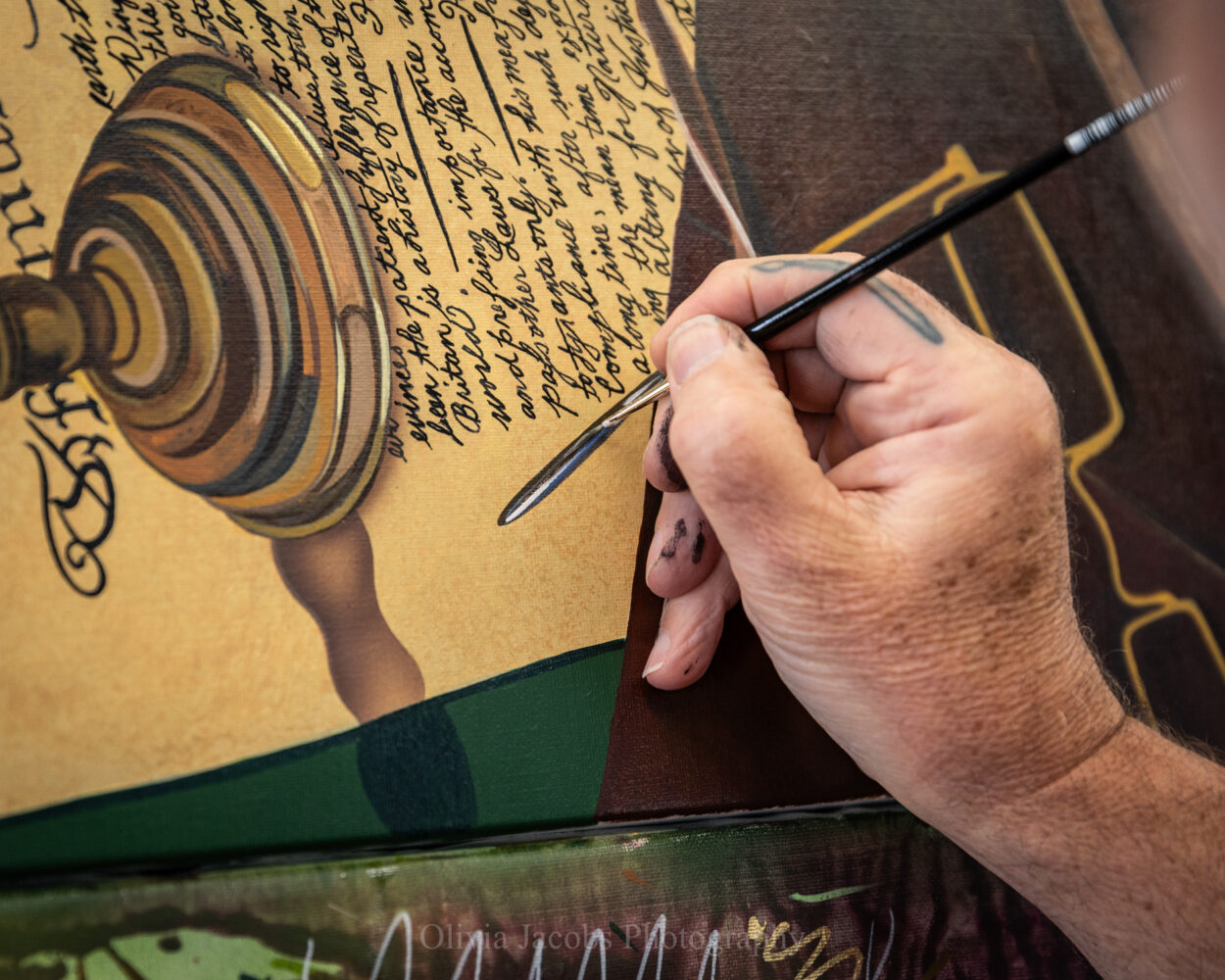
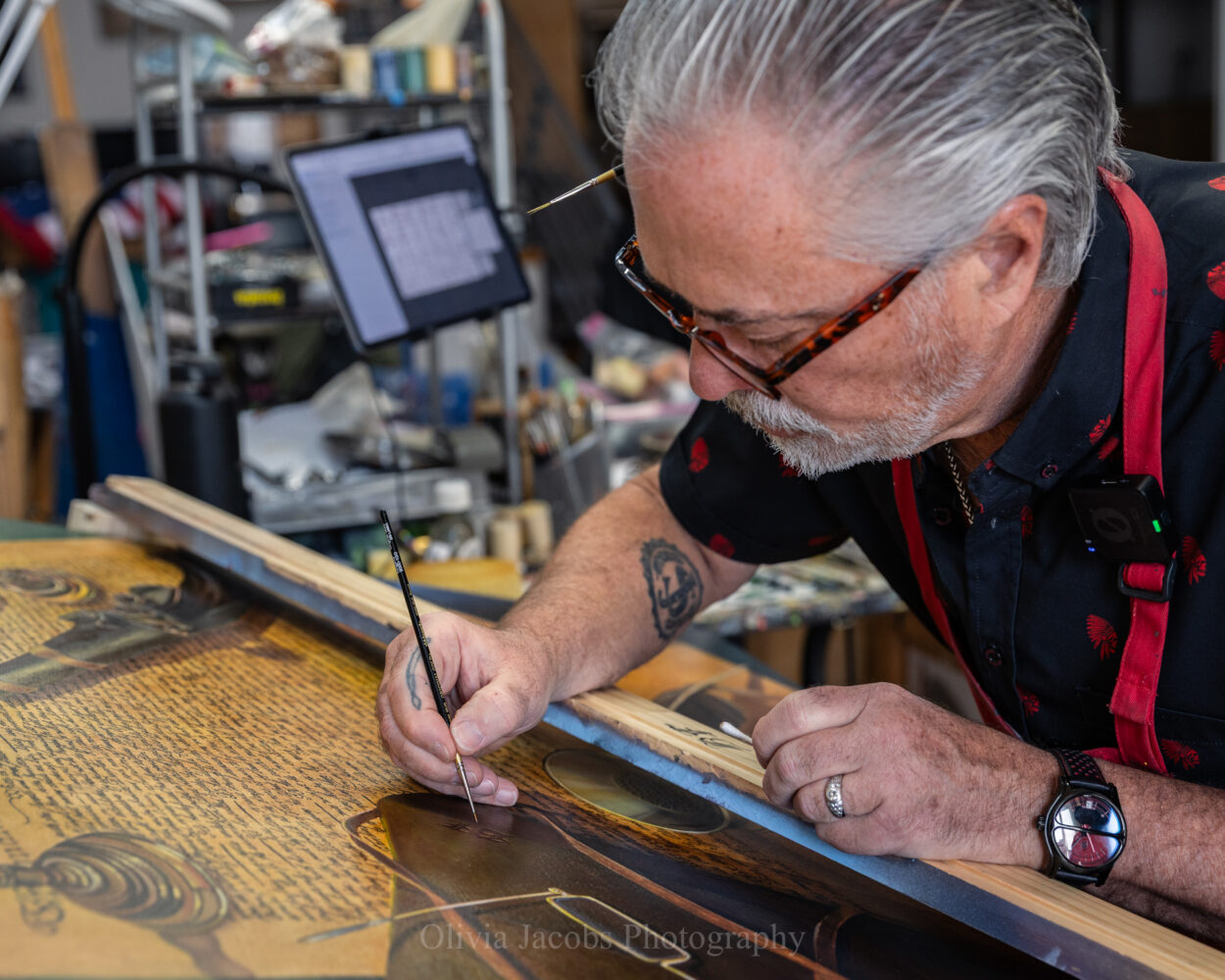
Once the acrylic underpainting was complete, Scott was ready to begin one of the most intimidating stages of the entire project: hand-lettering the Declaration of Independence.
Unlike most paintings, this wasn't a matter of simply suggesting text or creating the illusion of writing. The document needed to be historically accurate and recognizable as the Declaration itself.
Every line mattered.
Every flourish mattered.
Every inconsistency mattered.
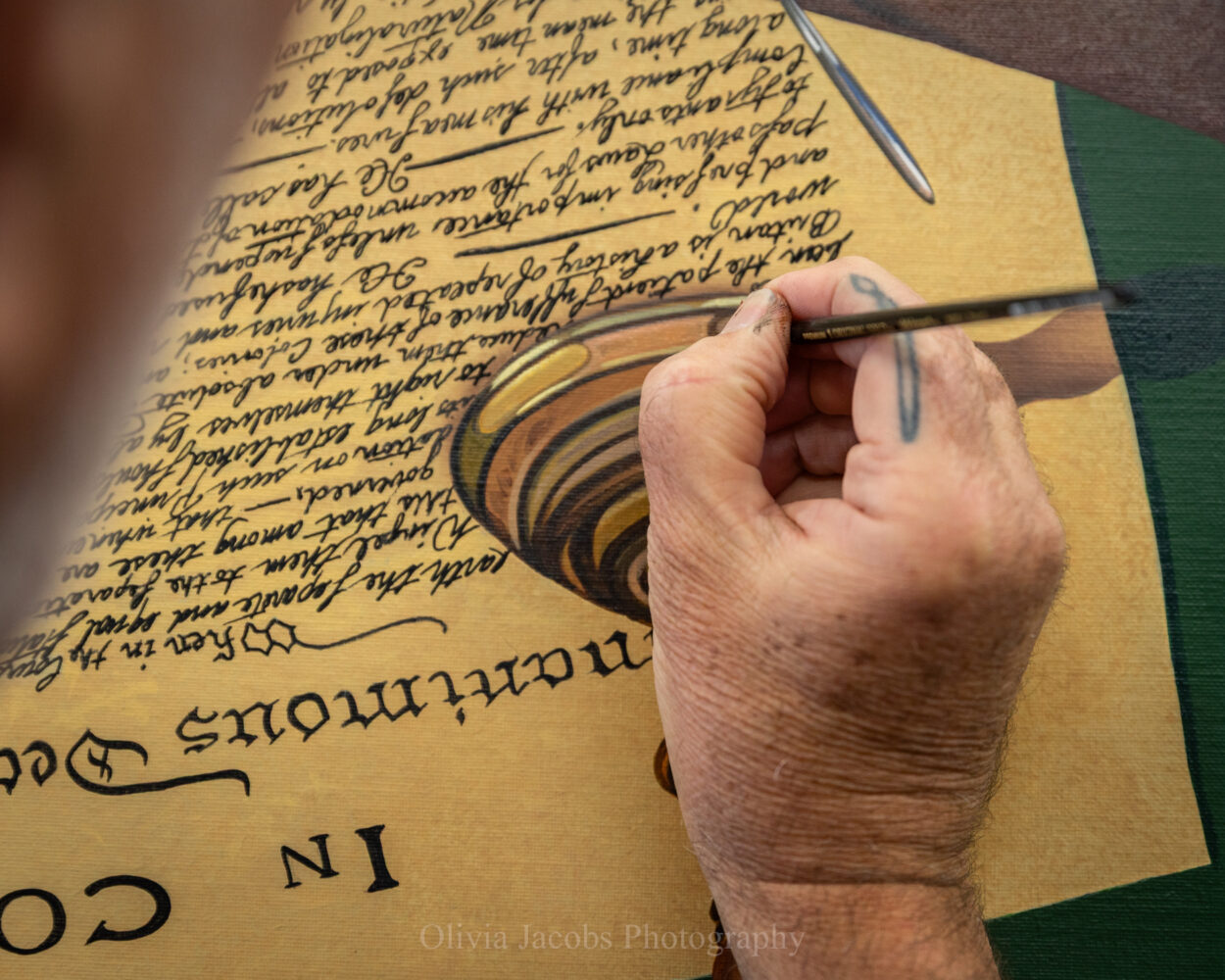
Using a projector as a guide, Scott carefully began reproducing the document by hand, making sure the spacing, letterforms, and layout stayed as faithful to the original as possible.
The process took more than eight hours.
For much of that time, Jimi stood behind him reading directly from the Declaration while Scott painted.
"While I read the document to Scott, I detailed what I was seeing and how it was written so Scott knew what to pay close attention to. Making sure the lettering was accurate was the most painstaking part of this whole piece" reflected Jimi.
The challenge wasn't simply copying words. The original Declaration wasn't perfectly uniform. As the document progresses, the lettering changes in size and spacing. Certain words are capitalized unexpectedly. Missing letters are inserted with marks above the text. Decorative flourishes appear throughout the document.
In other words, it looks exactly like something written by hand in 1776.
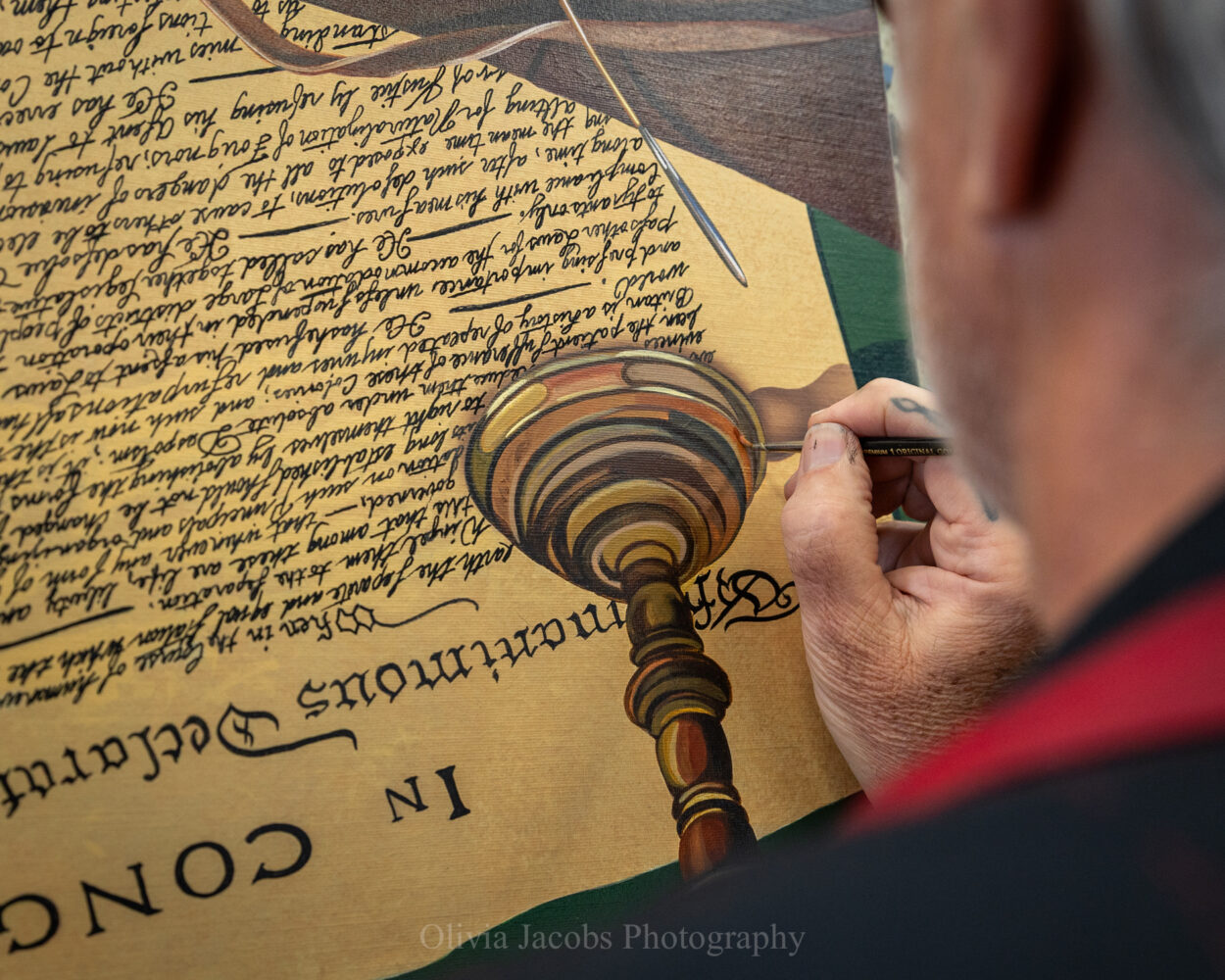
Scott spoke about the challenge,
"If you look from the top going down, you'll notice the lettering changes like they ran out of space toward the bottom. It was difficult not keeping everything uniform, but Jimi helped be my spotter reading along while I wrote."
The first day alone required nearly five hours just to complete the initial layer of lettering and that was plenty for Scott's tired eyes.
But even then, the work wasn't finished.
The following day was spent refining the document, adjusting the thickness of individual words, and correcting subtle variations caused by the quill becoming dull as the writing progressed.
It's the kind of detail most viewers will never consciously notice, yet those details are what give the painting its authenticity.
For a commission celebrating the 250th anniversary of the United States, "close enough" was never going to be good enough.
The Declaration of Independence deserved the same care and attention that went into signing it 250 years ago.
This version raises the stakes and turns the lettering into what it really was: not just writing words on a canvas, but recreating one of the most important documents in American history by hand.
Bringing the Scene to Life
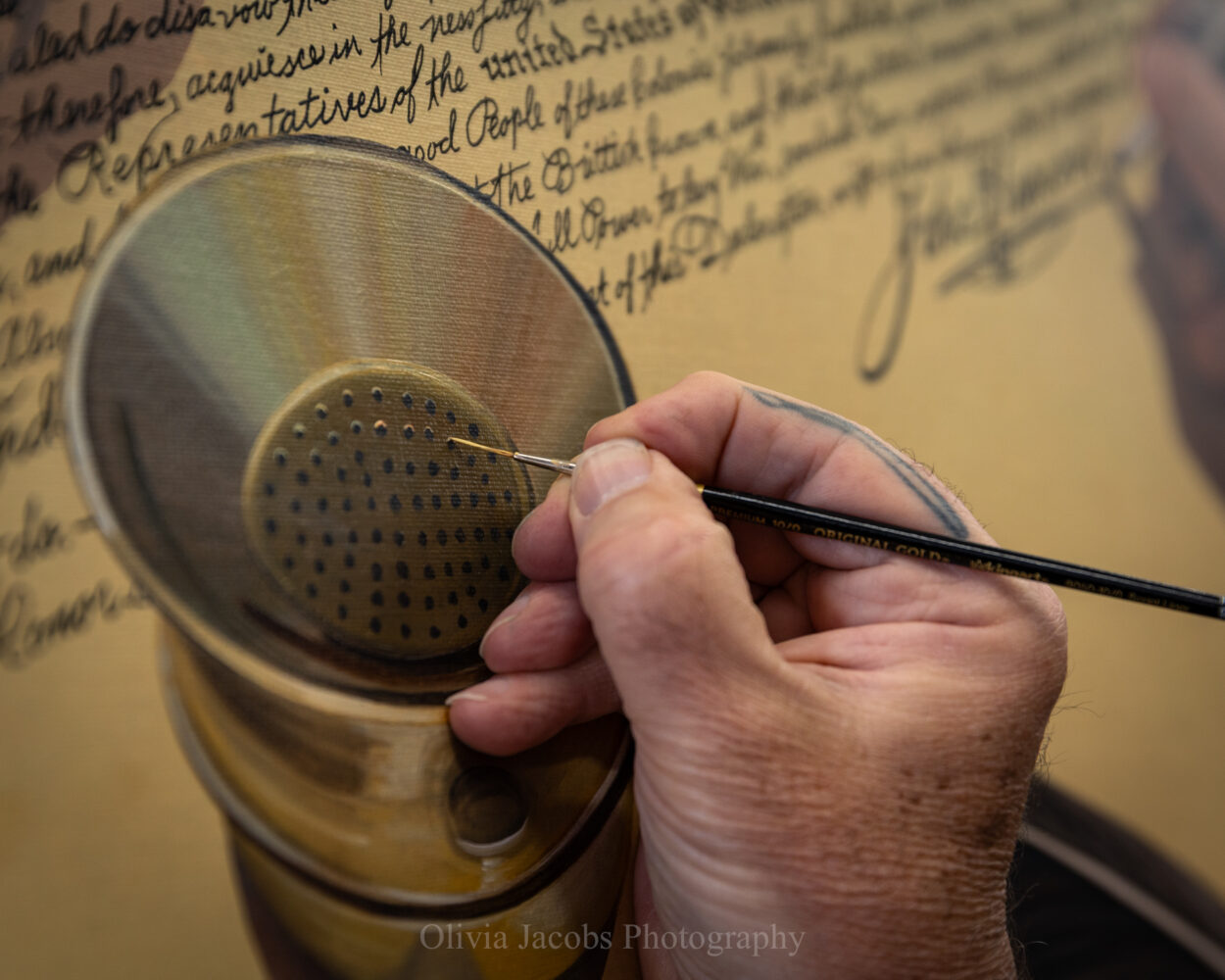
Once the most grueling part of the project was finally complete, Scott could turn his attention to the rest of the painting.
While the document served as the centerpiece, every other element in the composition had to support the feeling of stepping back into 1776.
One of the biggest challenges was the lighting.
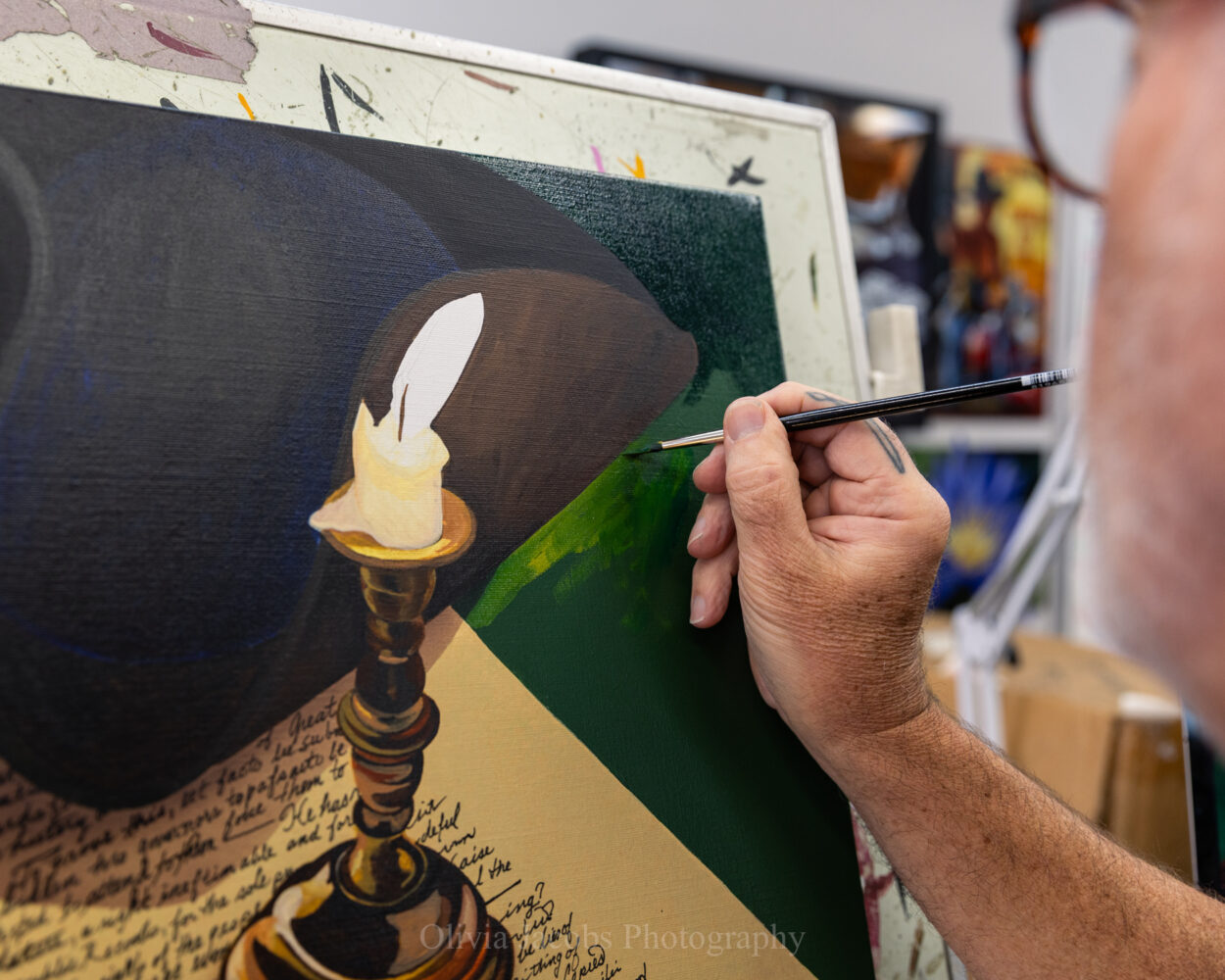
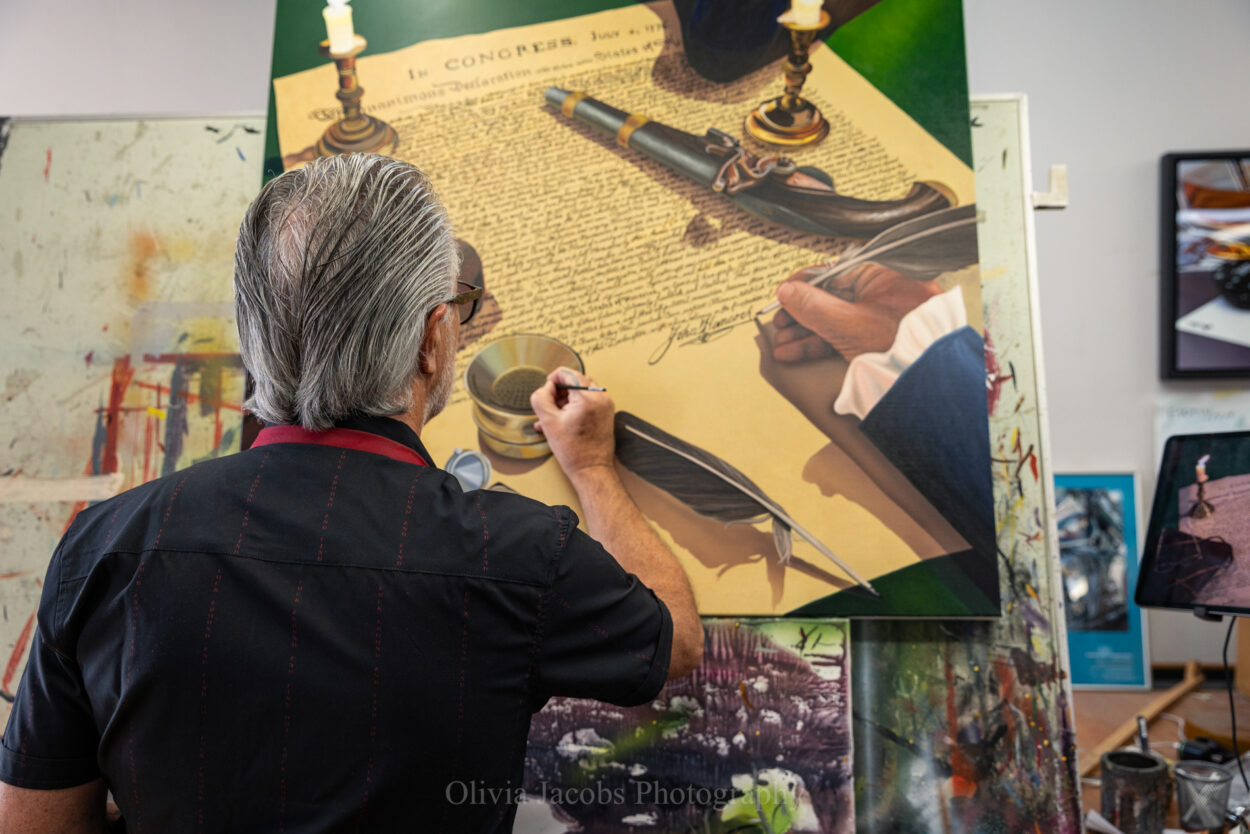
The scene takes place in a dimly lit room illuminated by only two candles. That meant every object in the painting had to react to the light exactly as it would have centuries ago. Shadows couldn't be too dark, highlights couldn't be too bright, and the colors needed to reflect the warm glow of candlelight rather than modern electric lighting.
This affected every brushstroke.
The pistol, the quill, the ink bottle, and even the tabletop required carefully placed highlights and lowlights to create the illusion of a room lit only by flame.
Scott used layers of warm oil paint to introduce subtle amber and golden tones, allowing the fabric to absorb and reflect the candlelight naturally.
It's the kind of detail most viewers will never consciously notice, but that's often the difference between a painting that looks believable and one that feels believable.
Every decision, from the warmth of the tablecloth to the glow on the edge of the pistol, was made with one goal in mind: transporting the viewer back to the moment when a handful of signatures changed the course of history.
The Final Touches
"I wanted there to be props that were easy to spot as being Benjamin Franklin's, so I included bifocals and a leather-bound journal with his initials embossed on it."
They sat thoughtfully to the side to make it feel like he was standing nearby as history was being made.
The Finishing Touch
Once the painting finally felt complete, there was one last step before it could take its place as part of America's 250th anniversary celebration.
It needed a frame worthy of the occasion.
The finished artwork was placed into a large, ornate frame that immediately elevated the painting from a work of art to a historic presentation piece. Rich in detail and craftsmanship, the frame was designed to complement the significance of the subject without overpowering it.
Engraved within the liner were American flags, a subtle but meaningful tribute to the nation whose founding story the painting tells. The patriotic details served as a reminder that this was more than a painting of a document, it was a tribute to the birth of the United States itself.
The scale of the frame was impressive. Its substantial presence commanded attention and gave the piece the sense of importance it deserved. Standing before it, you couldn't help but feel that this wasn't simply artwork destined for a private collection or gallery wall.
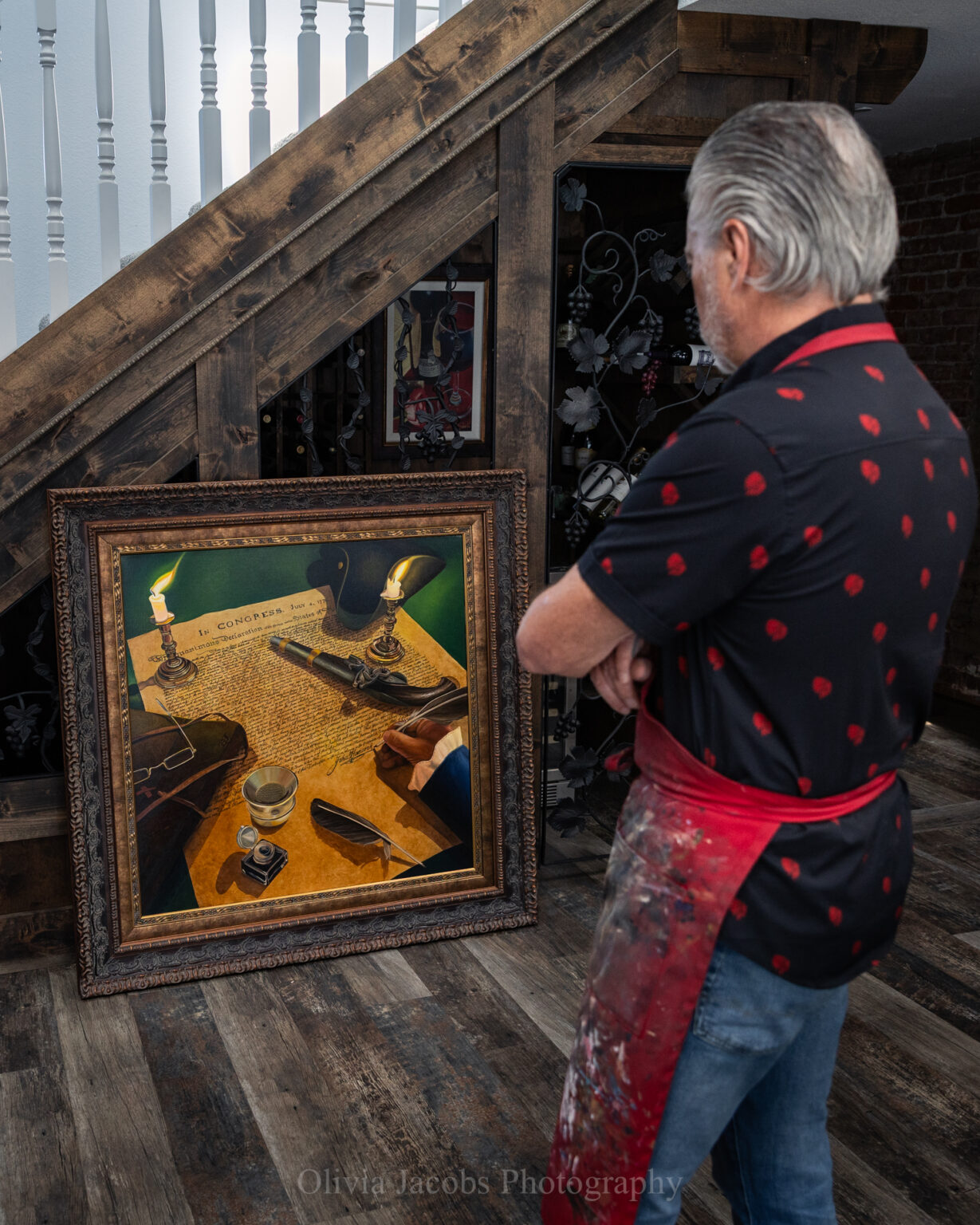
This was a painting created to commemorate a once-in-a-generation milestone in American history.
The frame became the final chapter in the presentation of the piece surrounding the artwork much like a monument surrounds a historic moment. Together, the painting and frame transformed months of research, planning, photography, and countless hours of painting into a finished work that honored the courage, sacrifice, and vision of the men who helped create a nation 250 years ago.
After months of work, hundreds of reference photos, and countless hours at the easel, the painting was finally ready to leave the studio and begin its journey into history.
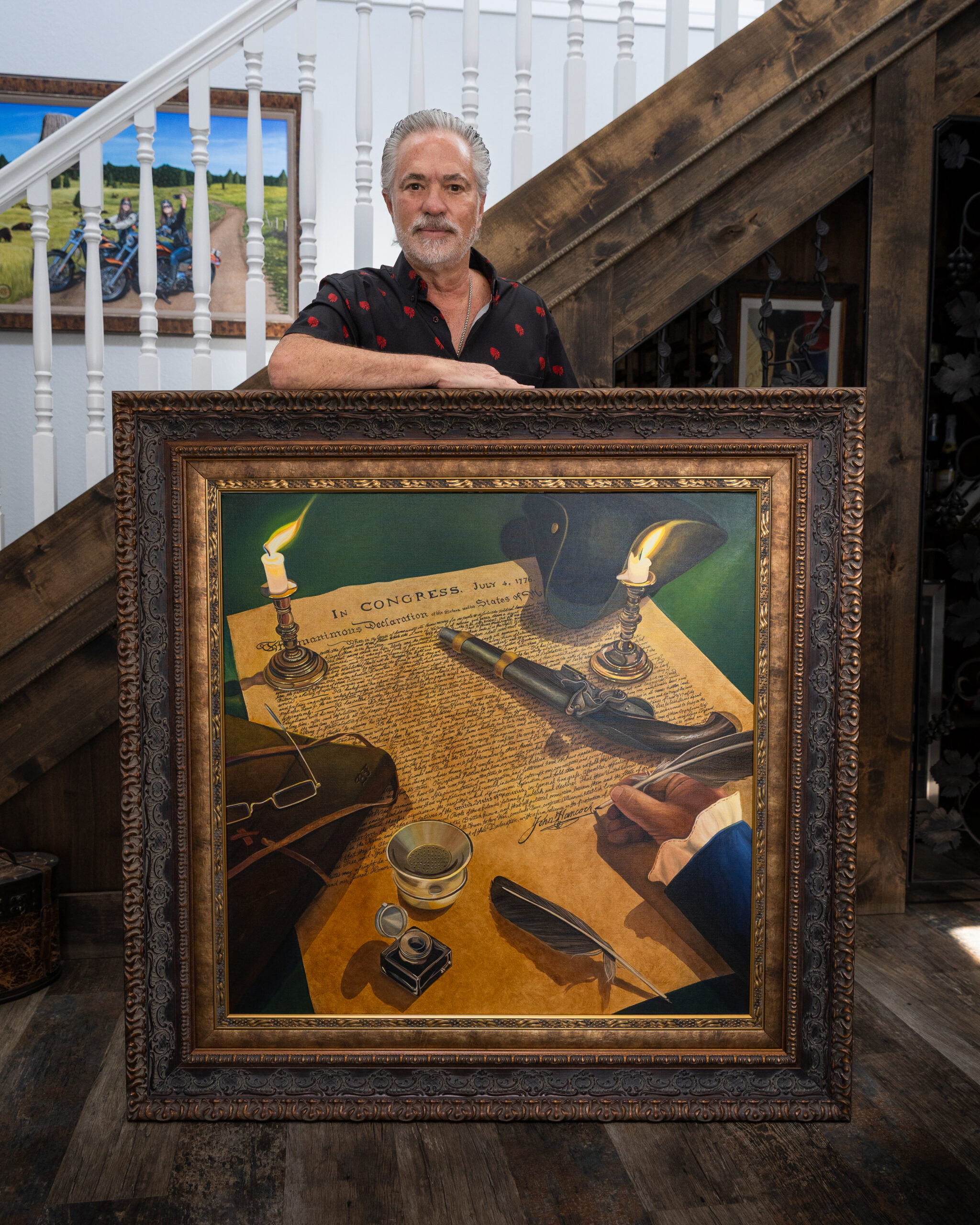
"The Moment of Freedom"
Available in three sizes.
To view more of Scott's "Spirit of America" paintings, click here.